Imagine you’ve just launched your new water‑bottle brand… only to realize your “unique” design is nearly identical to three other bottles on Amazon. That’s the hidden risk lurking behind the wrong manufacturing choice—especially when you’re sourcing a Chinese water bottle or working with overseas factories.
The big question every emerging brand faces is simple: Should you go OEM or ODM for your water bottles? In this post, we’ll break down both models in plain language, show you where each shines, and help you pick the right path for your brand, your budget, and your long‑term vision.
What OEM vs ODM Really Means
At a high level, OEM and ODM are two different ways of working with a manufacturer.
OEM (Original Equipment Manufacturer)
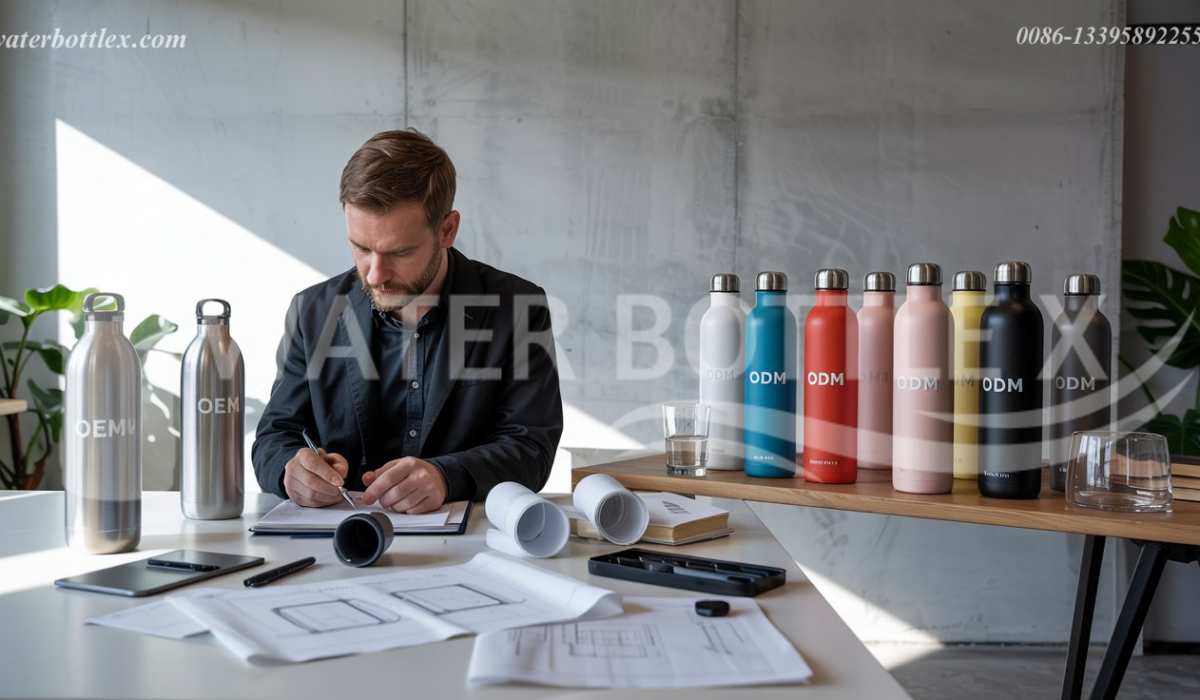
You provide the design, the specs, the materials, and even the lid mechanism if you want. The factory’s job is to build exactly what you’ve designed under your brand name. This is “full‑custom” manufacturing: you own the design, the factory owns the tooling.
ODM (Original Design Manufacturer)
The factory already has a ready‑made bottle—materials, lid, shape, insulation, everything. You choose from their existing designs, tweak colors, logos, maybe a few finishes, and ship it under your brand. Think of it as “ready‑built, lightly customized.”
Both can be produced in China, so whether you’re sourcing a Chinese water bottle or not, the model you choose will shape your brand identity, margins, and time to market.
When OEM Makes Sense for Your Brand
OEM is the right choice if you care deeply about:
Design control and brand uniqueness
Only OEM lets you create a completely different silhouette, lid mechanism, grip, or handle geometry that your competitors can’t copy. This is how premium stainless‑steel and insulated brands build recognizable, ownable shapes.
Performance and target‑market needs
Want a bottle that’s taller and slimmer for gym bags, or squatter for car cup holders? With OEM, you dial in wall thickness, insulation cores, and lid seals to match your user’s habits. Factories with real OEM experience can walk you through mold timelines, material choices (304 vs 316 stainless, Tritan, titanium‑plated finishes), and even regulatory compliance.
Long‑term IP and scalability
Once the mold is built, you can reuse it across colors, limited editions, and even new product lines. That’s how many brands cut per‑unit costs over time and justify higher upfront investment.
Typical drawbacks of OEM:
Higher initial tooling and mold fees
Longer lead time (weeks or months for prototyping and testing)
Higher minimum order quantities (MOQs) to amortize those costs
When ODM Is the Smarter Move
ODM shines when you want to launch faster, spend less upfront, and still look professional.
Advantages of ODM:
Speed to market
No new molds, no new engineering. You select a design from the factory’s catalog, change colors, logos, and maybe cap finishes, and you’re ready to go. This is ideal for:
Promotional campaigns
Test runs in a new market
Startups validating demand before investing in full OEM.
Lower entry cost and flexible MOQs
Because the factory already owns the mold, your MOQs are often lower and more flexible. You avoid the one‑time mold‑development fee while still getting bulk pricing versus retail‑store bottles.
Access to proven designs
The ODM designs have already been tested for seal, drop resistance, and insulation. Instead of troubleshooting a new shape, you can focus on branding, packaging, and marketing.
Limitations of ODM:
You can’t fully own the bottle shape; other brands may use similar designs.
Customization is mostly surface‑level (colors, labels, slight finishes).
Less differentiation if many players choose the same catalog model.
How to Decide: A Practical Checklist
Ask yourself these questions before locking in OEM or ODM for your water bottles:
What’s your brand’s long‑term goal?
“We want to build a recognizable, ownable product line” → lean OEM.
“We want to test a market quickly or support B2B/promos” → lean ODM.
What’s your budget and timeline?
Adequate upfront capital + longer lead time → OEM.
Tight budget + urgent launch → ODM.
How unique does the design need to be?
If you’re okay with a “me‑too” shape but want your logo and colors to stand out, ODM is fine.
If differentiation is a core part of your USP (e.g., for premium, eco‑forward, or niche categories), OEM is the better play.
Do you plan to expand the line later?
OEM‑built molds pay for themselves over time; you can reuse them for new lid variants, colors, collaborations, and regional SKUs.
Combining OEM and ODM Smartly
Many brands don’t choose “one or the other forever.” Instead, they use a hybrid strategy:
Launch with ODM for a quick B2B or promo bottle, then
Use the revenue and feedback to fund an OEM flagship model that becomes your hero product.
For example, an eco‑conscious brand might:
Start with ODM bottles for corporate gifting and events, then
Launch a fully custom OEM bottle with unique ergonomics and a plant‑based lid, marketed as their “signature” line.
Partnering with the Right Manufacturer
Whichever path you choose, the factory matters just as much as the model. Good partners will:
Clearly explain costs, timelines, and quality controls.
Offer samples and prototypes so you can test grip, weight, and leak‑proofing.
Help you navigate certifications (FDA‑grade materials, LFGB, EU compliance) and shipping logistics.
If you visit waterbottlex.com, you’ll find resources on working with overseas manufacturers, such as our guides on how to choose a stainless‑steel water‑bottle supplier and design‑driven prototyping for drinkware brands.
Final Takeaways
OEM gives you full control, brand‑ownable designs, and long‑term scalability—but at higher upfront cost and longer lead time.
ODM gets your product to market faster, with lower risk and flexible MOQs, but with less differentiation.
Many successful brands use both: ODM for quick wins and OEM for signature products.
If you’re still unsure whether your brand should lean OEM or ODM for your next water‑bottle line, contact the team at waterbottlex.com for a no‑pressure consultation. We’ll help you map your goals, budget, and timeline, then advise on the right manufacturing model and even walk you through sample development for your Chinese water bottle (or any other target market).