

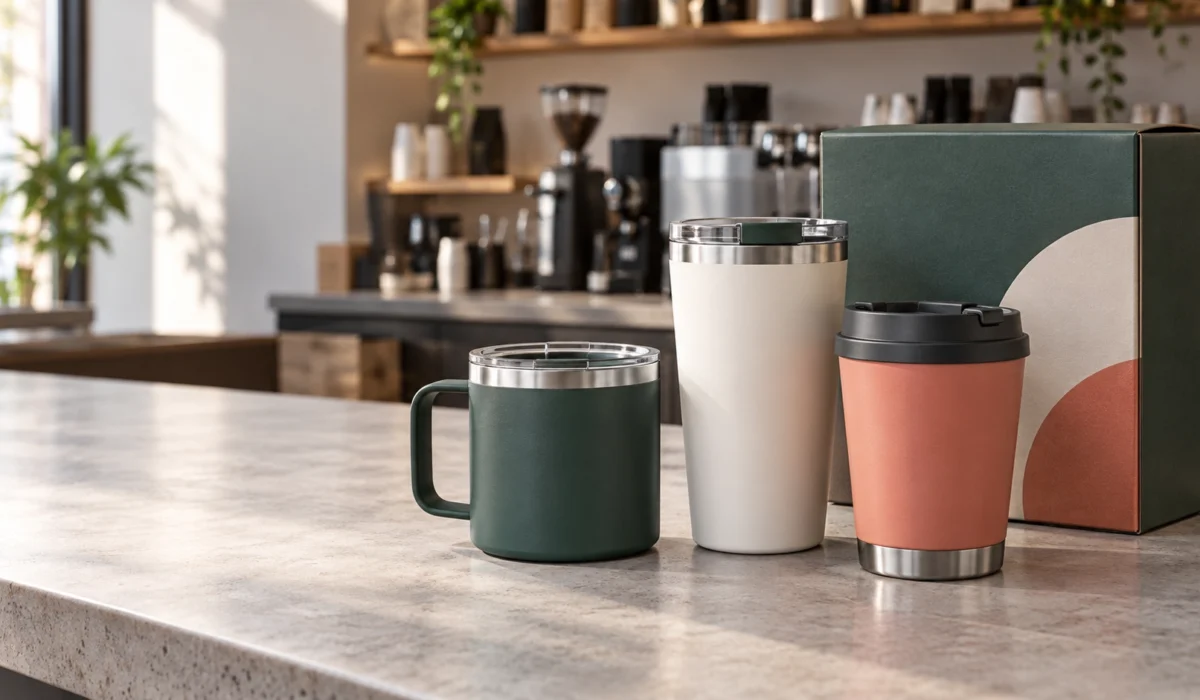
Beyond the Logo How Coffee Brands Can Build Retail Ready Custom Drinkware
National Coffee Day puts coffee at the center of the conversation on September 29, but the commercial opportunity extends well beyond one campaign date. The National Coffee Association reported in September 2026 that 66% of American adults had consumed coffee in the past day, while specialty coffee reached a new high. For roasters, café groups and subscription brands, that daily routine creates a natural setting for merchandise customers can use repeatedly.
Yet adding a logo to a generic cup does not automatically create a retail product. Custom drinkware for coffee brands needs a defined customer, a clear use case and a product story that fits the way the brand already sells coffee.
Start With the Role of the Merchandise
Decide what the drinkware must do for the business before choosing a mug. A checkout add-on, subscription reward, seasonal drop and permanent retail line each require a different approach to price, quantity, packaging and assortment depth.
A café may need a compact mug that feels natural at a desk or breakfast table. A commuter-focused brand may prefer a lidded tumbler that can move between home, transit and the workplace. A gift set may place more emphasis on presentation and how the cup sits beside a bag of coffee.
Write the intended sales channel, target customer, expected retail position and use case into the brief. These decisions give the manufacturer a commercial reason for each product requirement.
Choose a Format Around the Coffee Routine
Capacity, lid style, handle shape, opening and overall footprint should support the drinking occasion you are targeting. A handled mug and a travel tumbler may both carry the same visual identity, but they solve different jobs.
Review the product as a user would. Consider grip, lid operation, drinking flow, cleaning access and how the cup fits its intended storage or carrying environment. If a particular material, temperature-retention result or destination-market document matters, place that requirement in the specification and confirm it for the selected model rather than assuming it applies across a category.
Build a Focused Assortment
More choice can look impressive in a presentation and create unnecessary inventory complexity in practice. A disciplined first collection might begin with one hero format and a small number of purposeful colorways. Each SKU should have a clear customer or channel role.
For every proposed variation, ask whether it serves a distinct preference, selling environment or price point. If the difference is only cosmetic, compare the value of additional choice with the added forecasting, packaging, photography and stock-management work.
Treat Branding as a Product System
A recognizable product identity comes from the relationship between the body color, finish, lid, artwork, packaging and other visible components. The logo is one part of that system.
WaterBottleX lists custom colors and finishes together with decoration methods such as laser engraving, screen printing, UV printing and embossing, subject to the selected product. The right choice depends on the artwork, substrate, desired appearance, quantity and review criteria. Ask to see the intended color, finish and branding method together on a physical sample when those elements define the product.
Design Packaging for the Sales Channel
Retail packaging has to present the brand and protect the item in the way it will actually be sold. A shelf box, an e-commerce mailer and a coffee-and-cup gift set place different demands on structure, inserts, artwork and packing method.
Confirm the bottle or mug dimensions before the packaging structure is finalized. Then define how the product will be held, what information or labels the buyer must supply, how the box will be opened and whether the pack will travel individually or inside a larger shipment. WaterBottleX offers custom retail, gift and branded packaging options, with the final specification confirmed for each project.
Approve the Complete Retail Product
Sample approval should cover more than an attractive front view. Review the exact product configuration, colors, finish, artwork revision, logo size and position, lid or handle operation, included components and packaging fit. Record what has been approved so that design, purchasing and production teams work from the same reference.
The sample is also the moment to decide whether the product supports the planned photography, shelf presentation and price position. Required testing, documentation and production inspection remain separate project controls and should be agreed for the destination market.
Send a Decision Ready Brief
A useful enquiry allows a manufacturer to recommend a realistic development route. Include:
Target customer, use case and sales channel
Preferred mug or tumbler format, capacity and key components
Estimated quantity by SKU and intended retail position
Brand colors, artwork files, finish and decoration preferences
Packaging format, labels, inserts and gift-set requirements
Destination market, target launch window and required documents
Internal sample approvers and any must-pass acceptance criteria
Build Merchandise Customers Choose
The strongest coffee merchandise feels connected to the brand before the customer notices the logo. It suits a familiar coffee moment, earns its place in the assortment and arrives in packaging designed for the way it will be sold.
Planning a retail drinkware collection for your coffee brand? Share your target customer, sales channel, preferred format, artwork, estimated quantities, packaging needs, destination and launch window with WaterBottleX to discuss a suitable OEM or ODM route: https://waterbottlex.com/contact-us/