

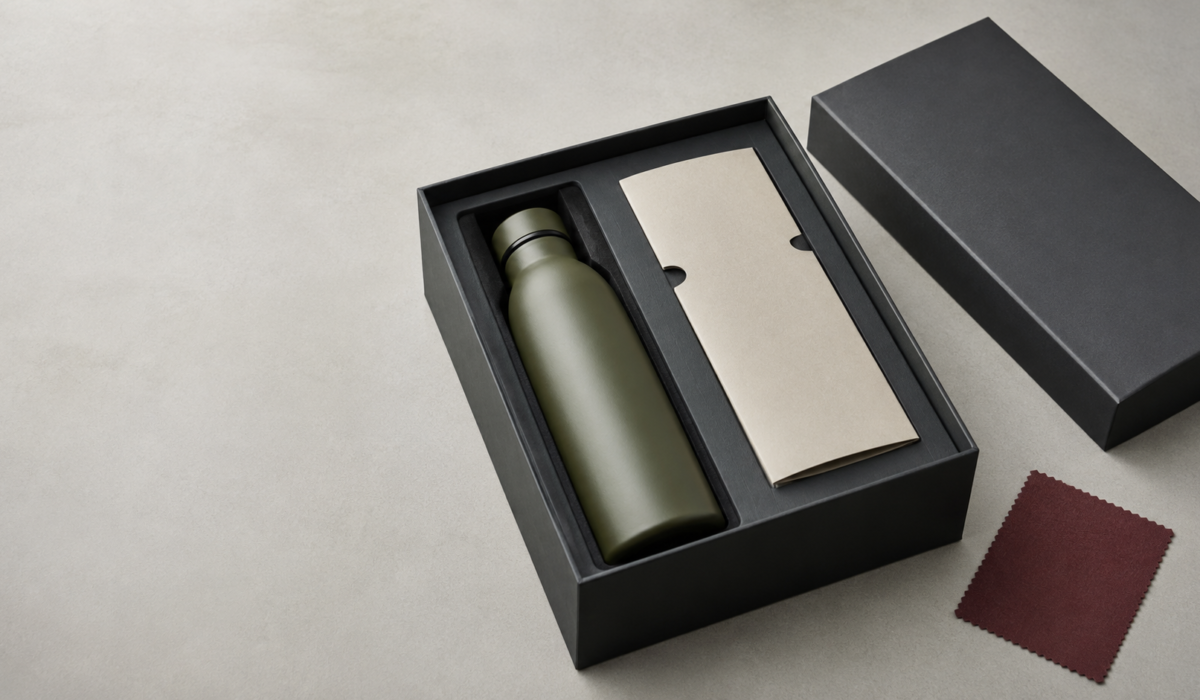
From Bottle to Gift Set: How to Brief Custom Drinkware Packaging
A corporate drinkware project can start with a simple request: put our logo on a bottle and present it in a gift box. Turning that idea into a production-ready specification requires more detail.
The packaging must fit the selected bottle, support the intended presentation and protect the product through the chosen distribution route. It may also need to accommodate printed materials, regional artwork versions or fulfillment labels.
A clear custom drinkware packaging brief helps the buyer, manufacturer and packaging team work from the same requirements. Here is what to define before approving a gift set for production.
Start With the Recipient and Delivery Method
Packaging decisions should follow the way the gift will be used.
A set presented to executives at an event may call for a rigid gift box and a carefully arranged interior. A welcome gift shipped directly to an employee needs packaging suited to parcel handling. Drinkware packed inside a larger onboarding kit may require a more compact box with dimensions that work with the complete kit.
Include these points in the opening section of your brief:
- Who will receive the gift?
- Will it be handed over, shipped individually or packed into another kit?
- Where will the finished sets be delivered?
- Is the packaging intended for a single campaign or ongoing use?
These answers give the supplier a practical basis for recommending a box format and insert structure.
Confirm the Drinkware Before Designing the Box
Avoid finalizing packaging dimensions while the bottle is still changing. Capacity, lid style, handle, base diameter and overall height can all affect the box and insert.
First confirm the product model, color and finish. Then provide the packaging designer with an approved sample or verified dimensions. If several bottle colors will share one box design, specify the number of variants and how they will be identified during packing.
WaterBottleX offers formats including rigid gift boxes, printed color boxes, e-commerce mailers, kraft boxes and tube boxes. The suitable option depends on the selected drinkware, presentation goal, distribution method and project requirements.
Define What the Insert Must Do
An insert is more than a visual detail. Its first job is to hold the drinkware in the intended position.
The brief should show the required bottle orientation and list every item that belongs in the set. If a message card, sleeve, care information or another buyer-supplied component will be included, confirm its dimensions and placement early.
Ask the following questions during structural review:
- Can the bottle move inside the closed box?
- Is the lid protected from contact with the outer box?
- Can recipients remove the product without damaging the packaging?
- Are printed materials secured rather than placed loosely?
- Does the complete set remain practical for packing and distribution?
A physical packaging sample provides a better assessment of fit and handling than a rendering alone.
Give Every Branding Element a Purpose
The bottle and box should feel related without repeating the same branding treatment everywhere.
Your packaging brief should include approved artwork files, color references, logo placement, required labels and any areas that must remain blank. It should also distinguish fixed brand elements from campaign-specific information.
Available packaging finishes shown by WaterBottleX include hot foil, spot UV, embossing, debossing, soft-touch finishes and matte or gloss lamination. Feasibility should be confirmed against the chosen box material, artwork and quantity.
Use finishes selectively. An embossed logo may provide enough distinction on a restrained presentation box, while a printed color box may be more appropriate when campaign artwork is central to the experience. The right choice supports the brand rather than adding decoration without a clear role.
Review Packaging in Its Real Distribution Context
A presentation box and a shipping package do not automatically perform the same function. Tell the supplier whether the gift set will be delivered in bulk to one office, distributed through a fulfillment partner or sent as an individual parcel.
Confirm the required labels, barcodes, shipping marks and packing configuration. When third-party fulfillment is involved, request its packaging and labeling specifications before artwork approval.
This information can affect box dimensions, the need for an external mailer and the way finished sets are packed into shipping cartons.
Create One Decision-Ready Approval Checklist
Packaging projects often involve marketing, procurement, logistics and senior stakeholders. A single approval record helps prevent conflicting instructions.
Before mass production, confirm:
- Final bottle model, color, lid and decoration
- Box structure, dimensions and insert configuration
- Approved artwork, colors and finishes
- Included cards, labels or buyer-supplied components
- Pack-out method and shipping destination
- Physical sample approval
- Quantity by design, region or recipient group
- Required arrival date and agreed project milestones
Treat the approved bottle and packaging sample as one complete reference. A late change to either component may affect fit, appearance, cost or timing.
Turn the Idea Into a Complete Gift
Effective custom drinkware packaging connects the recipient experience with practical production and distribution requirements. The strongest briefs explain not only how the box should look, but also what it must hold, how it will travel and who must approve it.
Planning a corporate drinkware gift set? Share your selected product, quantity, artwork, packaging concept, destination and required arrival date with WaterBottleX to discuss a project-specific solution.