

What Buyers Mean by a “Golden Sample”
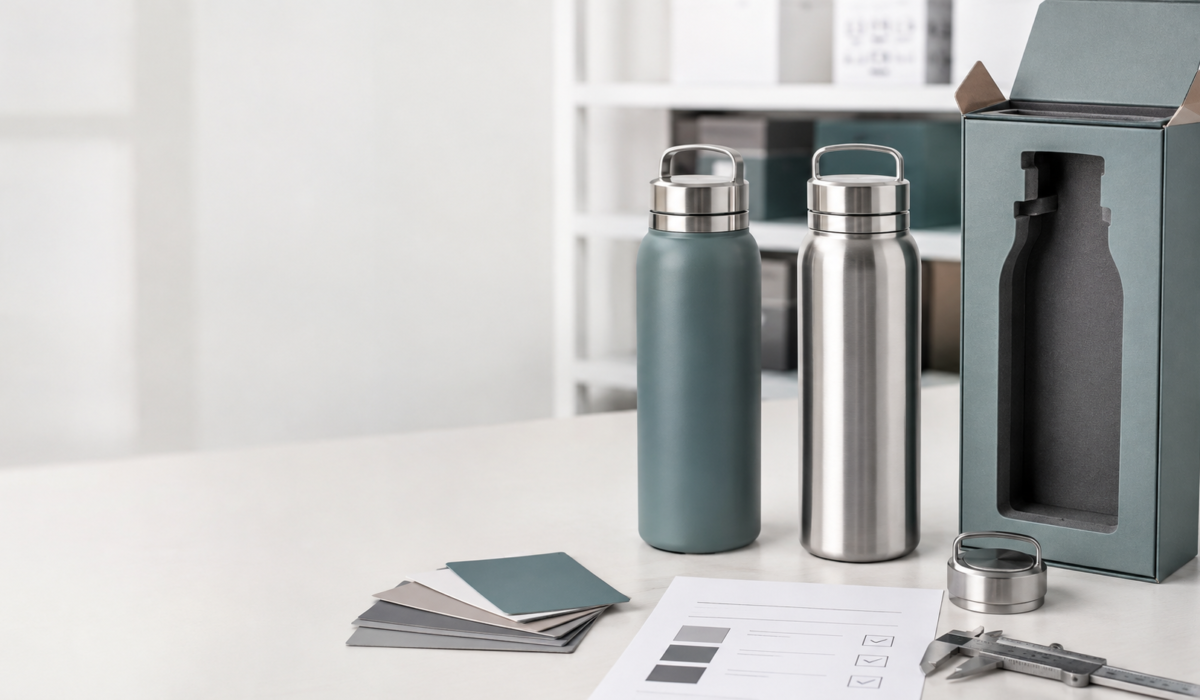
In this guide, a golden sample means the physical sample accepted as the main visual and functional reference for production. It should be connected to the final specification, approved artwork and packaging files. A rendering remains useful for placement discussions, but it cannot fully represent surface texture, gloss, metallic effects, lid movement or the way a printed mark appears on a curved bottle.
The reference should also have clear boundaries. Normal production variation and any agreed tolerances still need to be documented. Sample approval does not replace incoming inspection, production quality control or any testing required for the selected product and destination market.
1. Freeze the Product Configuration First
Begin with the parts that define the product. Confirm the model or drawing revision, capacity, material specification, lid style, gasket, handle, straw and other included accessories. If several colorways share one bottle but use different lids or packaging, identify each SKU separately.
This step prevents a common approval problem: marketing signs off the appearance while procurement assumes that every component shown in an earlier quotation is included. One current specification should show exactly what belongs to the approved SKU.
2. Review Color, Finish and Branding Together
Color should be reviewed on the intended material and finish, under lighting appropriate to the product’s sales environment. Record the agreed color reference, but also assess the physical result. The same color can appear different on powder coating, plastic, silicone and printed packaging.
For the logo, confirm the approved artwork revision, decoration method, dimensions, position, orientation and color. WaterBottleX lists options including laser engraving, silk-screen printing, UV printing and embossing; the right review criteria depend on the selected method. Check fine details, contrast and how the artwork follows the bottle’s curve. Avoid approving from a cropped photograph when scale and position matter.
3. Test the Sample in Its Intended Use
A visual check is only part of approval. Fill and close the sample, operate the lid as a user would, inspect removable components, and check that the bottle sits correctly in its intended packaging. If a handle, straw, lock or push button is part of the design, include it in the review rather than treating it as a secondary detail.
Turn market-specific or performance requirements into separate, written acceptance criteria. Do not assume that approving appearance confirms leak performance, material documentation, regulatory suitability or durability testing.
4. Approve the Packaging as Part of the Product
Retail and gift projects often involve more than the bottle. Review the box structure, insert fit, opening experience, printed artwork, barcode position, labels and packing method. Confirm which items are included and how they are arranged. Packaging changes can affect protection, carton configuration and fulfilment, so they should not remain an open decision after the bottle has been approved.
5. Create an Approval Record That Others Can Follow
The strongest approval record is concise but specific. Give the sample an identifier and approval date. Attach the current specification, artwork and packaging revisions. Add clear photographs from agreed angles, list any accepted deviations, and name the people authorised to approve changes.
Send feedback as instructions rather than impressions. “Move the logo 4 mm lower and use artwork revision C” is actionable. “The logo feels slightly high” is not. If a visible or functional change is made after approval, decide whether an updated photo, a revised component sample or a complete new sample is needed before production proceeds.
Make Approval a Production Decision
A golden sample works because it brings scattered decisions into one controlled reference. It gives marketing a clear brand standard, gives procurement a defined scope, and gives production and quality teams something concrete to follow.
Preparing a custom drinkware project? Share your selected product, quantity, artwork, color references, packaging requirements, destination and required arrival date with WaterBottleX. The team can help you plan the appropriate sampling and approval route before mass production.
Project enquiry: https://waterbottlex.com/contact-us/
Suggested Internal Links
Customization and OEM/ODM process: https://waterbottlex.com/customization/
Logo Printing Guide: https://waterbottlex.com/logo-printing-guide/
Custom Packaging Solutions: https://waterbottlex.com/custom-packaging-solutions/
What We Check Before Mass Production Starts: https://waterbottlex.com/what-we-check-before-mass-production-starts/
FAQ
What is a golden sample for custom drinkware?
It is the approved physical sample used as the main visual and functional reference for production, together with the final specification and artwork files.
Can a digital rendering replace a physical sample?
A rendering helps confirm concepts and artwork placement, but it cannot fully represent finish, color response, moving parts or packaging fit. The appropriate approval route depends on the project.
Who should approve the sample?
Assign named decision-makers for product configuration, branding, packaging and technical requirements. One person should control the final consolidated approval record.
What happens if we change the design after approval?
Document the revision and agree whether a new photo, component sample or complete sample is required. Production should follow only the latest approved reference.
Does sample approval replace product testing or inspection?
No. Sample approval defines the agreed product reference. Required testing, production controls and shipment inspection remain separate activities.