

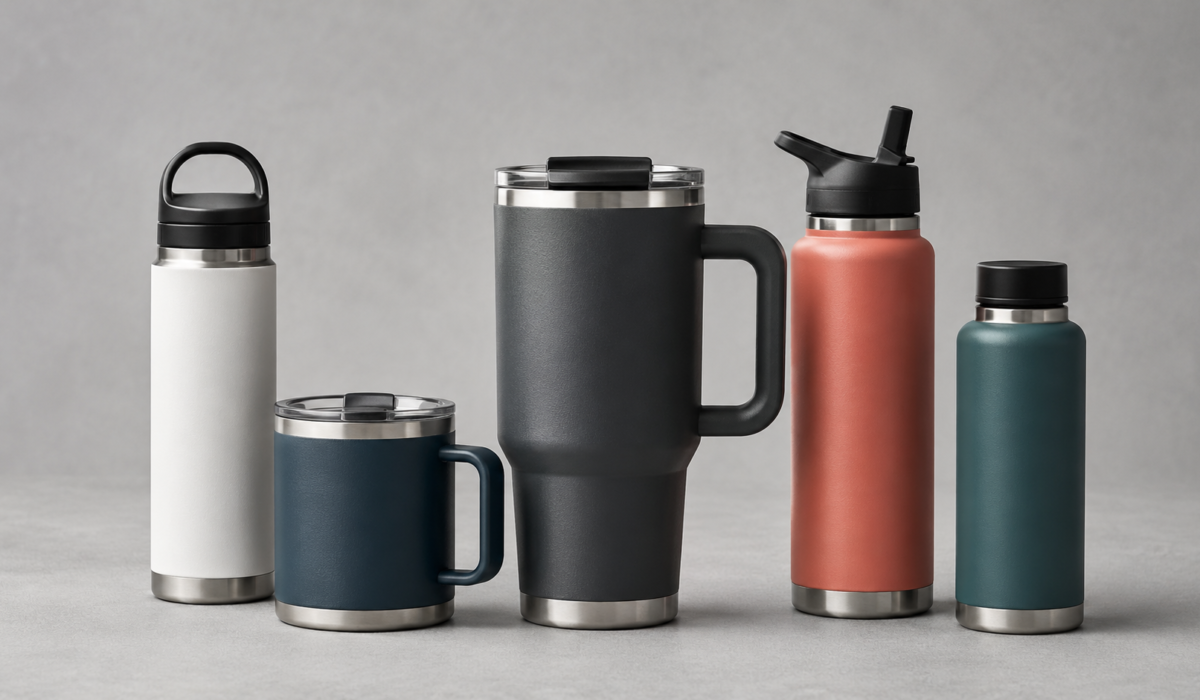
Adding more bottles does not automatically create a stronger range. For retail brands, every new capacity, lid, color, or package introduces another decision for purchasing, inventory, sales, and marketing teams.
A better approach is to build the collection around a clear hero product, then add supporting SKUs that serve distinct customers or occasions. This gives buyers enough choice without turning the assortment into a catalogue of minor variations.
If you are planning a custom drinkware collection for 2027, the following framework can help you prepare a more commercially useful development brief.
Start With the Customer, Channel, and Price Position
Before selecting bottle models, define where the range will be sold and who is expected to buy it.
A collection designed for outdoor retailers may emphasize portability, lid security, and convenient carrying. Office and commuter ranges may prioritize cup-holder compatibility, restrained finishes, and easy everyday handling. Gift-focused products may place greater weight on presentation and packaging.
Your initial brief should identify:
- The intended customer and primary use case
- Retail, e-commerce, wholesale, or promotional sales channels
- Target retail and landed-cost ranges
- Core destination markets
- Expected launch window
- Any retailer-specific packaging or labeling requirements
These decisions create boundaries for the range and help prevent attractive but commercially unsuitable products from entering development.
Choose a Hero Product With a Clear Job
The hero product should be the clearest expression of the collection. It is usually the item used most prominently in campaign photography, sales presentations, retailer pitches, and digital advertising.
That does not mean it must be the largest or most technically complex product. It should be the easiest item for the target customer to understand and the strongest reason to consider the range.
When evaluating candidates, ask:
- Does the product solve a recognizable use case?
- Is its shape visually distinctive within the intended market?
- Can the finish and branding support the desired price position?
- Is it practical for the planned sales and distribution channels?
- Can supporting products share enough visual language to feel connected?
Select the hero before finalizing the wider color and packaging system. Otherwise, the range may be forced to follow a product that was never intended to lead it.
Give Every Supporting SKU a Defined Role
Supporting products should extend the collection into adjacent needs rather than repeat the hero in slightly different forms.
For example, a handled travel tumbler could be supported by a slimmer commuter bottle, a compact coffee mug, and a sports-oriented bottle. Each product addresses a different moment while still belonging to the same brand family.
A supporting SKU may have one of several roles: reaching a new use case, providing a different price point, offering a more portable format, or creating an accessible entry product. If two products serve the same customer in the same way, buyers should examine whether both are necessary.
This discipline also applies to capacities and colors. A color variation is still a separate inventory decision, even when the underlying bottle is unchanged.
Create Recognition Without Making Every Product Identical
A coordinated range does not require every product to share the same mold. Recognition can come from repeated visual and tactile choices, including:
- A controlled color palette
- Consistent powder-coated or metallic finishes
- A common approach to logo size and placement
- Related lid colors and material accents
- A recognizable packaging system
- Consistent naming and product photography
The design system should be flexible enough to work across different silhouettes. A tall sports bottle and a compact coffee mug can still look related when their finishes, branding, and packaging follow the same rules.
Physical samples remain important because colors, textures, logo contrast, and curved print areas cannot be judged fully from a rendering.
Control SKU Complexity Before Sampling
Build a working matrix that lists each product, capacity, lid, color, logo treatment, package, and destination market. This quickly reveals how a small collection can expand into many production and inventory combinations.
Every additional combination can affect quotation quantities, artwork files, sample approvals, carton identification, forecasting, and replenishment. Prioritize the variants that have a clear commercial purpose, then keep secondary ideas for later extensions.
Brands can also consider developing the range in phases. An initial release might use selected existing bottle structures with coordinated colors, decoration, and packaging. More distinctive shapes or components can be evaluated after the brand has evidence about customer response and channel demand.
Prepare a Collection-Level Manufacturing Brief
A manufacturer can provide more relevant recommendations when it understands the complete range rather than receiving separate requests for unrelated products.
Include the following in the first discussion:
- Target buyer and sales channel
- Desired role of each product
- Indicative capacities and lid preferences
- Target color and finish direction
- Branding and packaging expectations
- Estimated quantity by SKU
- Destination markets and required arrival dates
- Required product or material documentation
- Planned sampling and internal approval process
WaterBottleX supports custom product development, finish selection, logo application, packaging, and private-label programs. Final recommendations, quantities, documentation, and schedules should be confirmed for the selected models and project requirements.
Build a Range That Earns Its Shelf Space
A successful custom drinkware collection is not defined by how many products it contains. It is defined by how clearly each product contributes to the customer proposition.
Begin with a strong hero, assign every supporting SKU a job, and use a consistent design system to connect the range. This creates a clearer brief for manufacturing and a more understandable offer for retailers and customers.
Planning a 2027 drinkware range? Share your target customer, sales channel, product roles, estimated quantities, destination markets, and intended launch window with WaterBottleX: https://waterbottlex.com/contact-us/